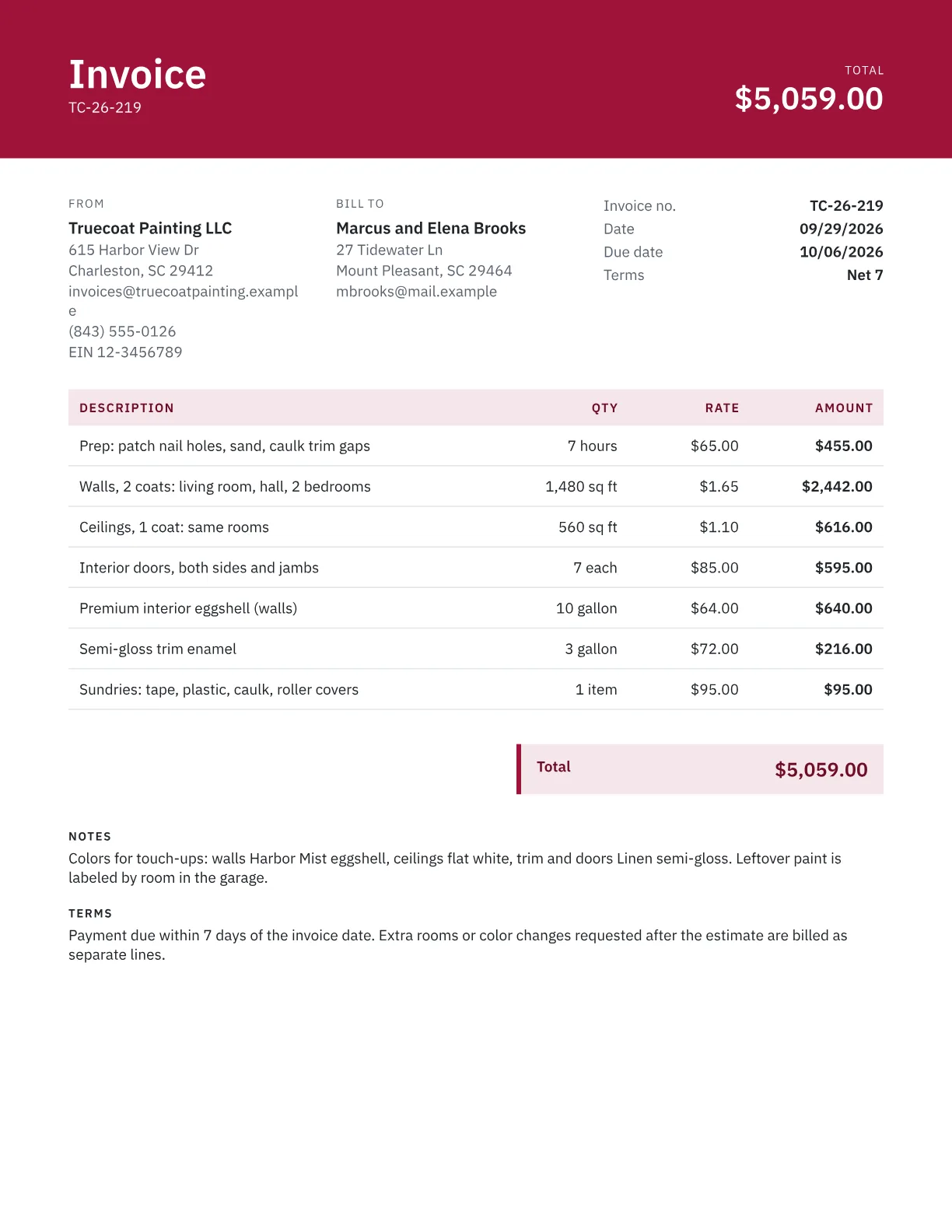
What to include on a painting invoice
- Your business name, contact details and license number, if your state licenses painting contractors.
- The client's name and the property address.
- Invoice number, date and due date.
- Rooms or areas painted, number of coats and sheen.
- Labor, priced by square foot, room, item or hour.
- Paint by the gallon with product and color, plus sundries.
- Any deposit received and the balance due.
Recording colors and sheens gives the client a reference for touch-ups years later, and gives you one if a color is ever questioned.
Labor, materials and markup
Bill labor in the same units you used on the estimate: square feet for walls and ceilings, each for doors, hours for prep and repairs. The client can then check the invoice line by line.
Paint and supplies go on their own lines. Many painters bill paint at retail and keep their contractor discount, or add 10% to 20% to cover buying and pickup; pick one approach and use it consistently. If the client supplied the paint, say so on the invoice, since your warranty then covers labor only. Sales tax on materials, and occasionally on labor, depends on your state, and the taxable toggle keeps the two apart.
Deposits, changes and older homes
On larger jobs a deposit covering materials is common; enter it as an amount paid so the final invoice nets it out. Extra rooms, color changes after cut-in, or wallpaper found under old paint should be approved in writing and billed as separate lines.
In homes built before 1978, the EPA's Renovation, Repair and Painting (RRP) Rule generally requires a lead-safe certified firm for work that disturbs more than 6 square feet of paint per room inside or more than 20 square feet outside. Bill containment and cleanup as its own line. You can also download the free painting invoice as a Word, Excel or PDF file.
Prefer a file?
Download this template, prefilled with typical line items. No email needed.
Frequently asked questions
How do painters usually price a job?
Interior walls are usually priced by the square foot of wall area or by the room, and exteriors by the square foot or by side of the house. Prep, repairs and extras like doors are often priced by the hour or per item. Use the same units on the invoice as on the estimate so the client can compare them.
Should paint be listed separately from labor?
Usually, yes. A separate paint line shows the product and quantity, makes touch-up paint easy to buy later, and lets you apply sales tax only to materials if that is how your state works. Keep tape, plastic, caulk and roller covers on a sundries line of their own.
How much deposit do painters take?
Many painters ask for enough to cover materials, often 10% to 30% of the job, and collect the balance on completion. Some states limit deposits on home improvement work, so check your state's rules first. Record the deposit as an amount paid so the final invoice shows only the balance due.
Do painters charge sales tax?
It depends on the state. Some tax the paint and materials you bill, a few tax painting labor as well, and others treat you as the end consumer who pays tax when buying supplies. Mark each line taxable or not in the generator and confirm with your state revenue department.
What should go in the notes on a painting invoice?
List the paint brand, color names or codes and sheen for each room, and where leftover paint was left. It saves a phone call when the client needs touch-ups and gives you a record if a color is ever disputed. Add any warranty you offer on your labor.