When to issue a credit note
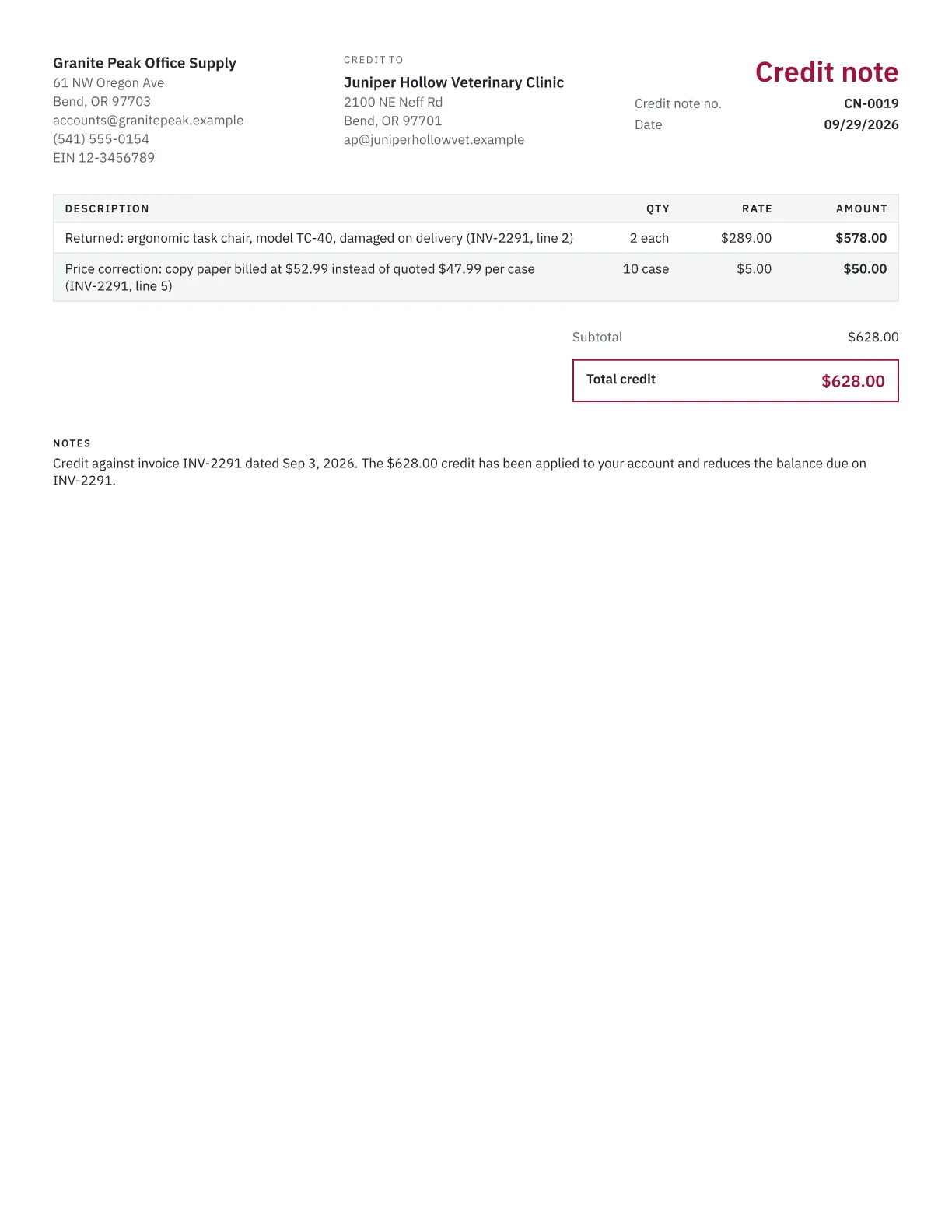
Once an invoice has been sent, don't edit or delete it. Issue a credit note that reduces it instead, so the audit trail stays intact and your invoice numbers have no gaps. Typical reasons:
- Goods returned or damaged in transit
- An overcharge or billing error
- A discount or rebate agreed after invoicing
- An order cancelled after it was billed
To cancel an invoice in full, credit every line.
What to include
- A credit note number from its own series, such as CN-0019
- The issue date
- The original invoice number and date
- The reason for the credit
- The items and amounts credited, with any tax
- How it will be settled: a refund, a credit to the account or an offset against the unpaid balance
How credit notes affect tax
If the original invoice included tax, the credit note should reduce it too, so credit the tax along with the price. In the US, if you refund sales tax to your customer, states generally let you reduce the taxable sales on your next return; your state revenue department sets the details.
In the UK, HMRC expects a VAT credit note to show the original invoice number and date and the VAT being credited, and the UK VAT invoice guide covers the related invoice rules. Australia uses adjustment notes, and the ATO sets when one must be issued; see the Australian tax invoice guide.
Refund or account credit?
A credit note changes what the customer owes; it doesn't move money by itself. If the original invoice is unpaid, the credit reduces the balance due. If it's already paid, refund the amount and record the refund, or carry the credit forward and deduct it from the next invoice. Say which on the credit note so both sides record it the same way.
Frequently asked questions
Is a credit note the same as a credit memo?
Yes. “Credit memo”, short for credit memorandum, is the usual term in the US; “credit note” is common in the UK, Canada, Australia and New Zealand. Australia's GST law calls the tax document an adjustment note. The contents are the same.
Can I credit part of an invoice?
Yes. Credit only the affected lines or quantities, for example two chairs out of ten, or the price difference on one item. Reference the original invoice line in the description so your customer's accounts team can match it quickly.
How should I number credit notes?
Use a separate sequence, such as CN-0001, CN-0002, rather than your invoice series, and always print the original invoice number too. That keeps invoice numbers unbroken and makes credits easy to find at year end.
Should amounts on a credit note be negative?
Either convention works if you use it consistently. Many businesses show positive amounts under a clear “Credit note” title, and their accounting software records the credit as a negative sale. What matters is that the document is unmistakably a credit and names the invoice it reduces.
What is a debit note?
The opposite of a credit note: it increases what the customer owes, for example when goods were undercharged or extra items were shipped. Many businesses simply issue a new invoice for the difference instead, referencing the original.