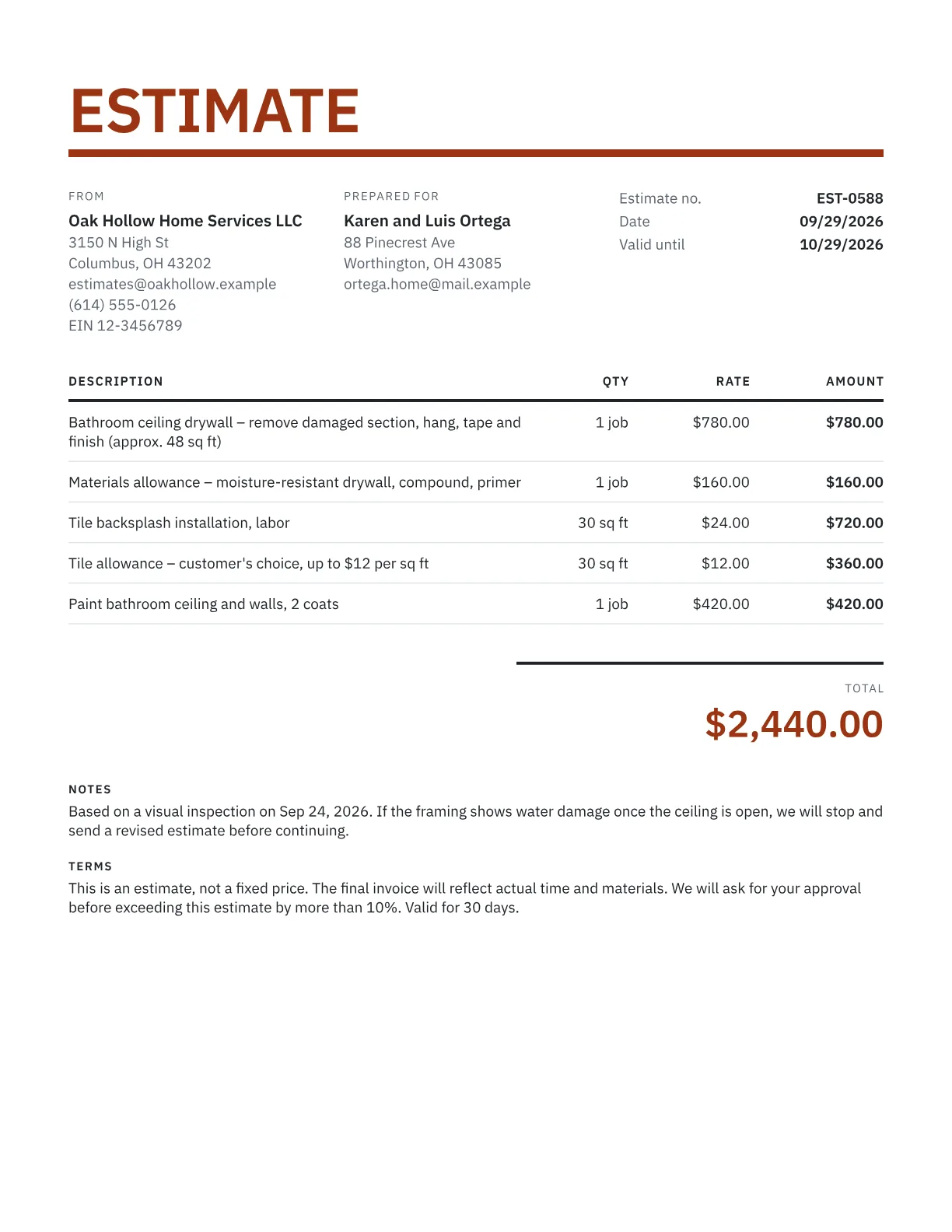
Estimate vs quote
An estimate is your best approximation of what a job will cost; the final bill can differ once actual time and materials are known. A quote is a fixed-price offer for a defined scope: once the customer accepts, you're expected to do that work for that price.
Terminology varies by trade and region. Contractors often call a fixed price a bid or proposal. Interstate movers work under federal rules, where a non-binding estimate limits what the customer must pay at delivery to 110% of the estimate. In the UK, a quote is generally treated as fixed and an estimate as a guide. Whatever you call it, say on the document whether the price is fixed.
What to include on an estimate
- Scope and assumptions, such as “based on visual inspection”
- Labor and materials on separate lines
- Allowances for items the customer hasn't chosen yet
- Exclusions, such as permits or debris hauling
- How long the estimate is valid
- What happens if costs rise
- A place for the customer's approval
When the cost changes
Tell the customer as soon as you know the job will run over, and before you do the extra work. A common policy is written approval for anything more than 10% above the estimate. Some trades are regulated: several states' auto repair laws require a written estimate and limit how far the final bill can exceed it without the customer's consent. For larger changes, send a revised estimate or a change order.
From estimate to invoice
When the job is done, switch the document type to Invoice and update the quantities to what was actually used. Replace allowances with real costs. If you took a deposit, enter it as the amount paid so the balance due is correct. Trade examples are on the contractor invoice and remodeling invoice pages.
Frequently asked questions
Is an estimate legally binding?
Generally not on price, because it's presented as an approximation. It still shapes the customer's expectations, and a final bill far above the estimate invites disputes. Label it clearly as an estimate, state your overrun policy and get approval in writing before exceeding it.
Should I charge for estimates?
Many trades give free estimates for routine work and charge for complex jobs that need design time or a site investigation, often crediting the fee against the job if the customer goes ahead. Whatever your policy, state it before you visit.
Can I give a price range?
Yes. Put your most likely figure in the line items and state the range in the notes, for example “expected range $2,200 to $2,700 depending on framing condition.” A range sets expectations without leaving the total blank.
How long should an estimate be valid?
Thirty days is common. For materials with volatile prices, such as lumber or copper wire, use 7 to 14 days, or state that material costs will be confirmed at purchase. Put the expiry date on the estimate itself.