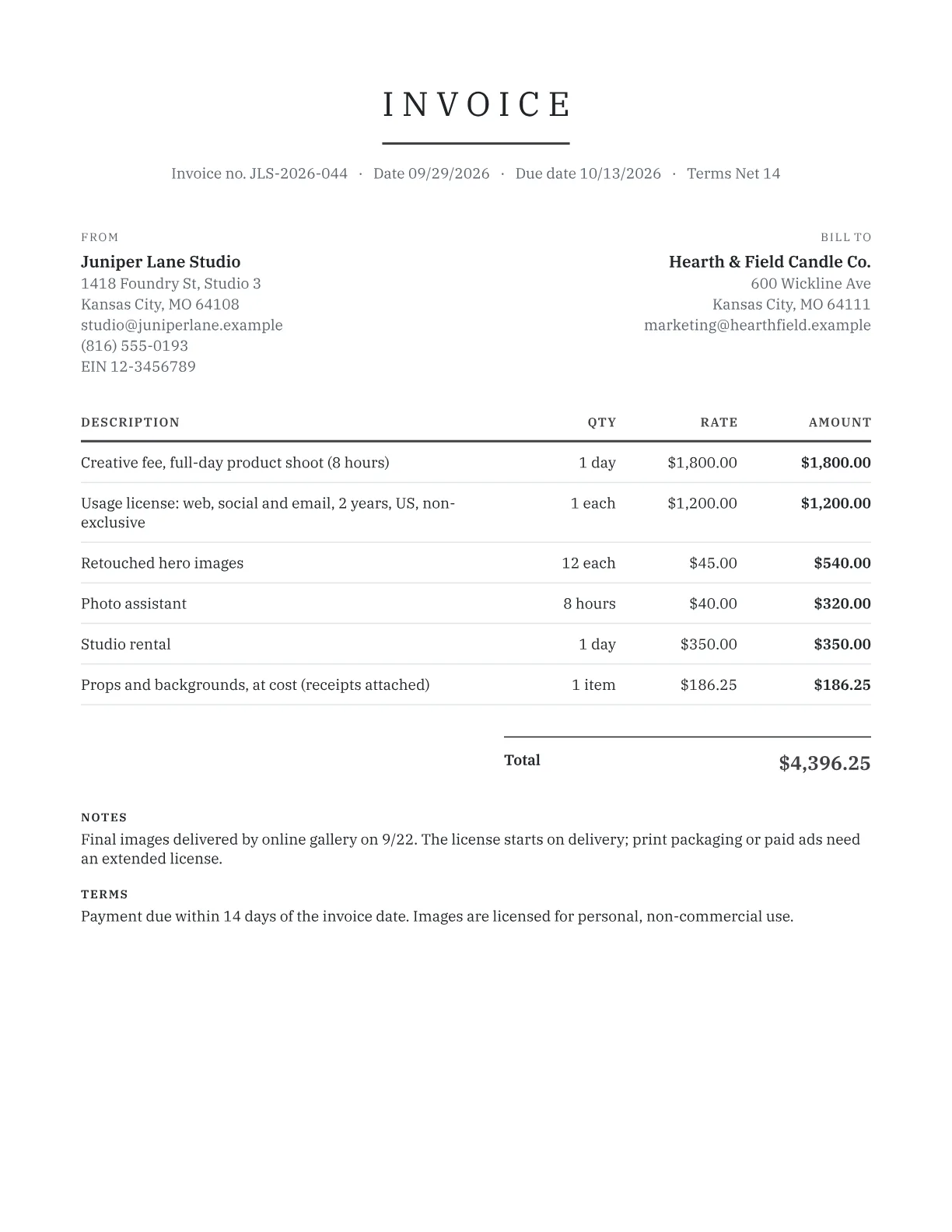
What to include on a photography invoice
- Your business name and contact details.
- The client's name, plus the shoot or event date and location.
- Invoice number, issue date and due date.
- The session or creative fee, separate from licensing.
- The usage license: where the images may be used, for how long, and whether it's exclusive.
- The number of edited images and how they will be delivered.
- Prints, albums and other products.
- Travel, assistants, rentals and other expenses.
- Any retainer already paid and the balance due.
Creative fees and usage rights
Commercial photographers usually split the price in two. The creative fee pays for planning, shooting and editing. The license fee pays for how the client may use the images: where (web, social, print, paid ads), for how long, in which territory, and whether the rights are exclusive. A one-year web license and a three-year national ad campaign license for the same shoot are priced very differently.
Write the license terms on the invoice line as well as in the contract, so there's a record of what was paid for. Portrait and wedding clients usually receive a personal-use license; say so in the terms.
Retainers, overtime and sales tax
Wedding and event photographers typically take a retainer to hold the date, often 25% to 50% of the package, with the balance due before the event. Record the retainer in the amount-paid field so the final invoice shows the balance. Coverage that runs past the contracted hours is billed as overtime at your stated rate; note the actual end time.
Sales tax on photography varies more than in most trades. Prints and albums are generally taxable, while digital files and licensing fees depend on the state. The free photography invoice is also available as a Word, Excel or PDF download.
Prefer a file?
Download this template, prefilled with typical line items. No email needed.
Frequently asked questions
What's the difference between a creative fee and a licensing fee?
The creative fee covers the work of producing the images: planning, shooting, crew and editing. The licensing fee covers the client's right to use them in specific places for a specific period. Separating the two makes it clear what the client is paying for when they later want to use the images more widely.
Is a photography retainer refundable?
That is set by your contract, not the invoice. Many photographers make the retainer non-refundable because it holds a date they can no longer offer to anyone else. Put the policy in the contract, repeat it in the invoice terms, and show the retainer as an amount paid so the balance due is correct.
Do photographers charge sales tax?
Often, but it depends on the state and on what you deliver. Prints, albums and other physical products are usually taxable. Digital image delivery, session fees and licensing are taxed in some states and not in others. Mark each line in the generator and confirm with your state revenue department.
How should I bill overtime at a wedding or event?
Agree on an overtime rate in the contract, usually per hour or per half hour, then add it to the final invoice as its own line with the actual time worked. Noting the scheduled and actual end times on the line makes the charge easy for the couple or client to check.
Should the invoice say how images will be delivered?
Yes. Note the number of edited images, the file format and the delivery method, such as an online gallery, along with the delivery date. It sets expectations and gives you a record if a client later asks for more images than the package included.